Ten years at the board
I've spent the last decade teaching Cambridge Mathematics. Somewhere along the way it stopped being work and became an obsession.
1000+ students taught so far
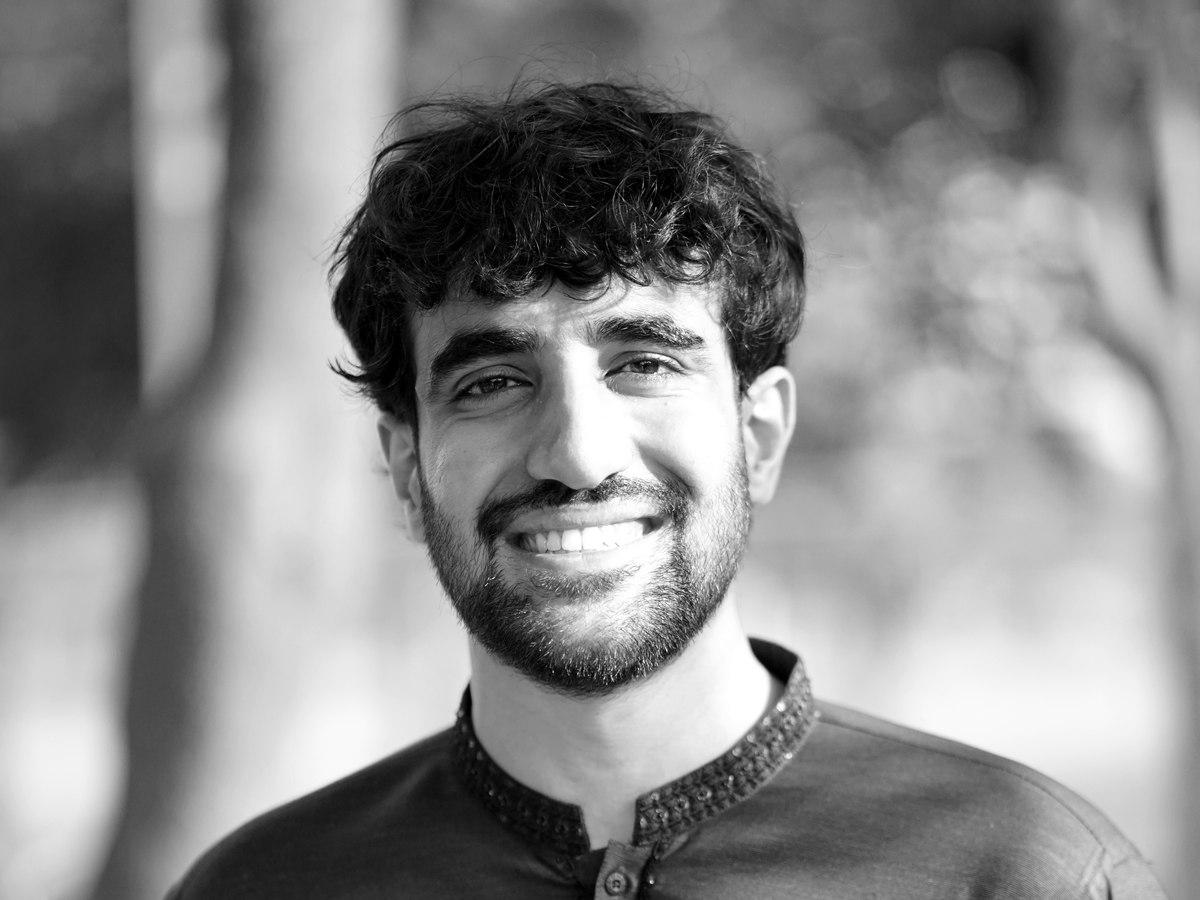
@vectorspacepkI'm Ali Hashir, and I've been teaching mathematics for ten years.
It started in 2016, as a volunteer at an orphanage. I wasn't planning on a teaching career — I just liked explaining things, and it turned out the explaining was the part I couldn't put down. A thousand or so students later, I still haven't.
Background
I studied Physics at the National University of Sciences and Technology (NUST), Islamabad, and afterwards went to RWTH Aachen University, Germany to study for a masters in Data Science.
Physics is where I learned that mathematics isn't a collection of procedures — it's a language for describing how things actually behave. Data science is where I saw how much of the modern world rests on two ideas students meet in Further Maths: matrices and probability. That's a large part of why I teach the subject the way I do.
Why Further Mathematics
Because almost nobody teaches it, and the students who choose it deserve better than working through it alone.
Very few teachers take on 9231. When my own students went looking for help — a set of notes that made sense, a worked solution that showed its reasoning rather than just its answer — there was very little out there. Additional Mathematics has entire websites devoted to it. Further Mathematics has scraps, scattered across forums and file dumps.
So that's the mission: make Further Mathematics accessible. Every topic on the syllabus, properly explained, with notes, worksheets, topical questions and full worked solutions — all of it on this site, all of it free, and all of it staying free.
Why these documents keep changing
For most maths subjects there is no shortage of material. What there is a shortage of is material that ever gets better. A PDF goes up in 2019, a student spots an error in 2021, and it's still there in 2026 — because nobody owns it any more.
I wanted to build the opposite of that: resources under version control, treated as living documents rather than finished ones.
- Find a question that teaches something well, and it goes in.
- Someone reports a mistake, and it gets corrected.
- Work out a clearer way to explain a step, and the explanation is replaced.
Every one of those changes is re-uploaded, so what you open today is the best version that exists — not the version I happened to finish first. It also means the correction one student sends me quietly improves the sheet for everyone who opens it afterwards.
That's why there's a Found a mistake? panel on every page that carries documents. It isn't decoration. It's how this works.
How I teach
Curiosity, then exploration, then understanding.
I won't hand you a technique before you know why it exists. We start with a problem worth being curious about and we go looking — we try the obvious things, watch them get ugly, and only then meet the method that rescues us. It arrives as an answer to a question you were already asking, rather than a rule to memorise.
That order is the whole of it. A method you were handed is something you revise. A method you saw the need for is something you understand, and understanding is what survives a question phrased in a way you've never seen. Once you know why something works, you don't forget it.
Get in touch
If something here is wrong, or a link is broken, please tell me — I would much rather know. If you're a student and something isn't clicking, that's worth telling me too; it usually means the explanation needs fixing rather than you.